Kinsale
A legendary haven of trade, forts, and walls that defined the sovereignty of Ireland.
The Wine Port of Ireland
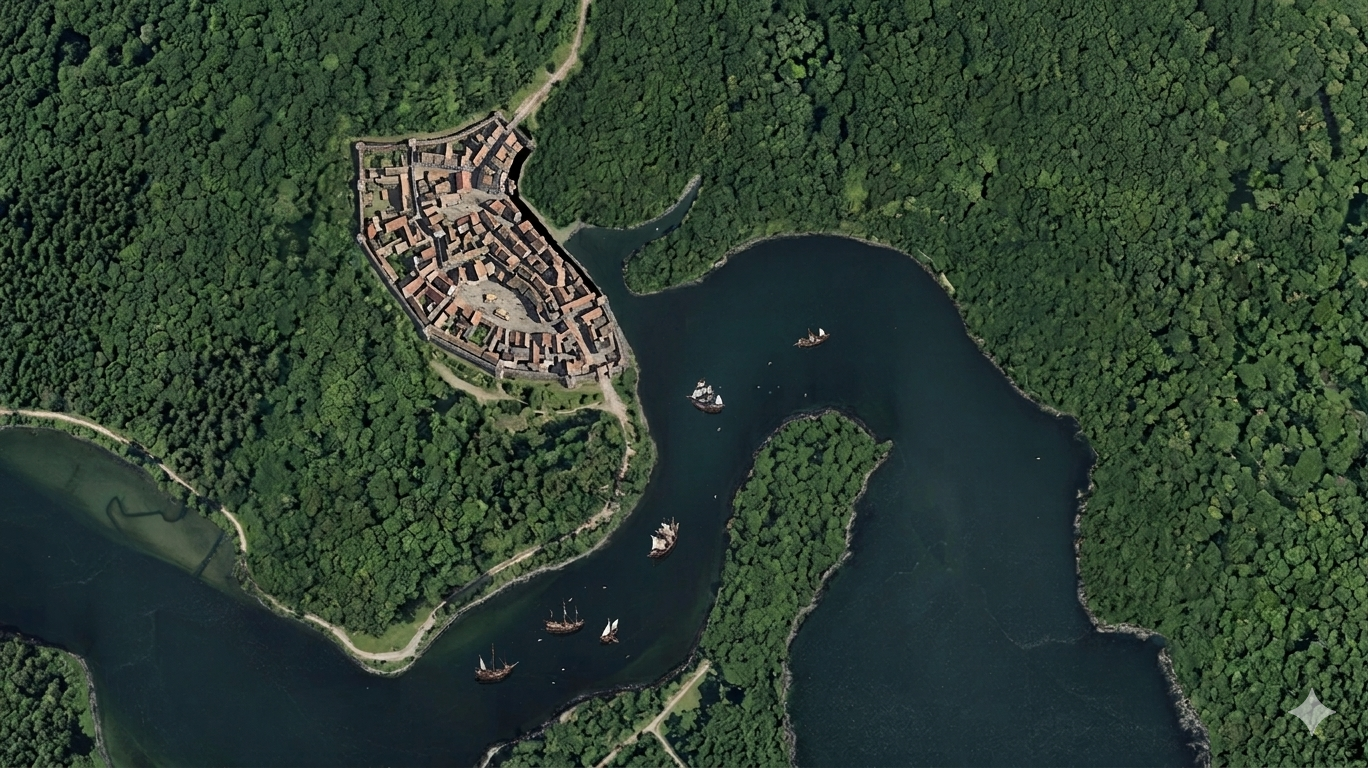
For centuries, Kinsale thrived as a peaceful maritime gateway. Gaelic Irish lords and merchant families loaded vessels with wood and hides, returning from Spain and France laden with fine wines, salt, and luxury silks.
The Spanish Landing (1601)
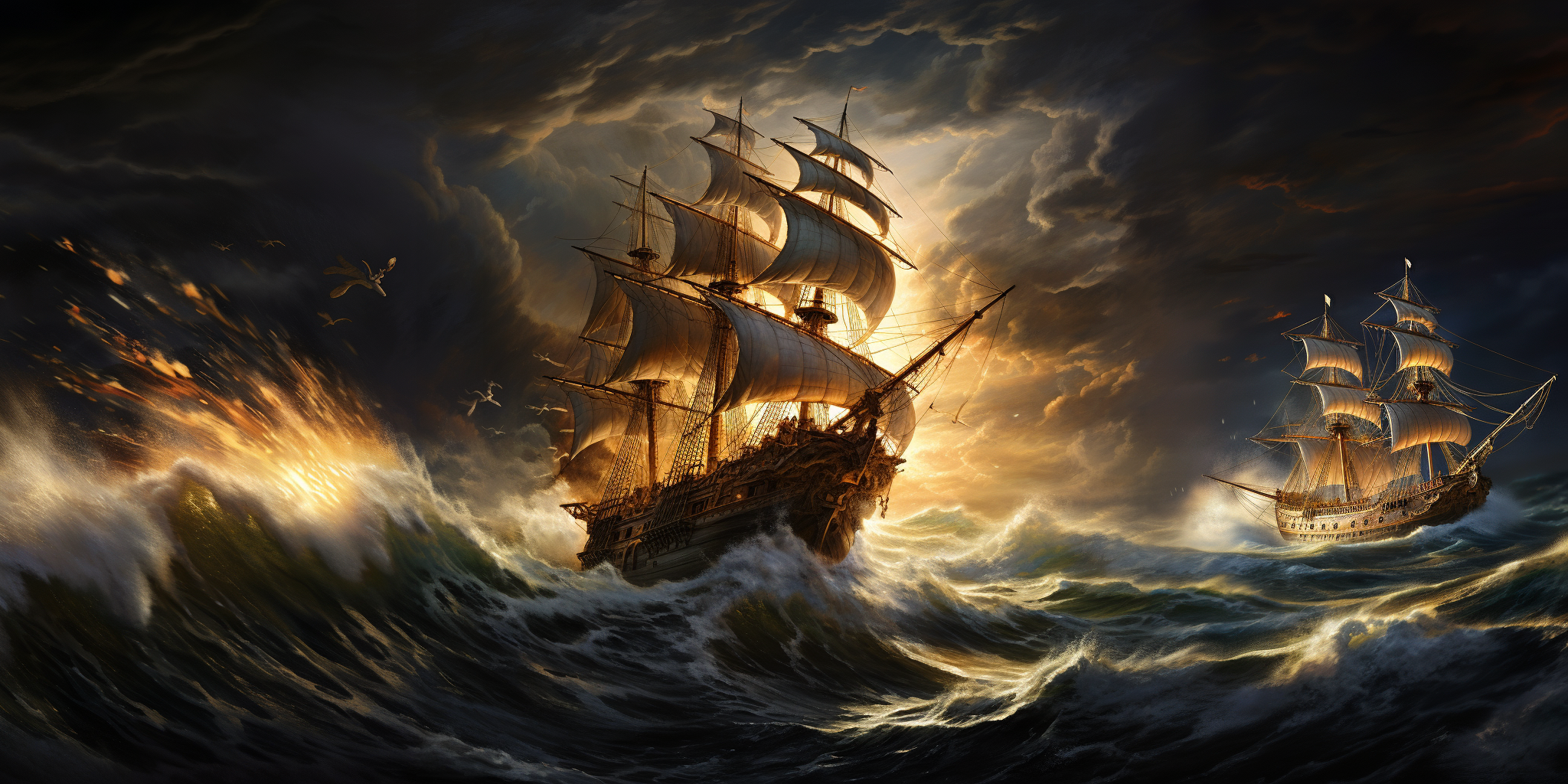
In October 1601, this quiet harbor became the focal point of European empire. An armada of 28 Spanish galleons carrying 3,500 veteran soldiers sailed into the mouth of the bay, claiming the town for Catholic Spain.
The Double Siege
As Don Juan del Águila secured the town's medieval walls, Mountjoy's English armies rushed to lay siege. Soon after, the Gaelic lords O'Neill and O'Donnell undertook a grueling winter march south, trapping the English in a double encirclement.

Sentinels of the Estuary
To secure the strategic waters of the Bandon River and command the harbor, massive stone fortresses were erected on opposite banks.
James Fort
Constructed on the Castlepark peninsula immediately following the Spanish surrender. Its pentagonal bastioned trace was designed to secure the harbor entrance and command the narrowest shipping channels.
Charles Fort
A massive, star-trace citadel constructed during the reign of King Charles II. With stone battlements dropping directly into the sea, it served as Kinsale's primary defense against naval onslaughts for over 250 years.
The White Lady
According to folklore, the governor's daughter threw herself from the ramparts after her soldier-husband was executed for sleeping on watch. Her spirit in a white wedding dress is said to still walk the battlements.
Inside: The English Enclave
Under English administrative control, the walled town functioned as a secure merchant stronghold. Loyal subjects traded in spices and wine, locked safely within stone ramparts that barred the native Irish countryside at dusk.
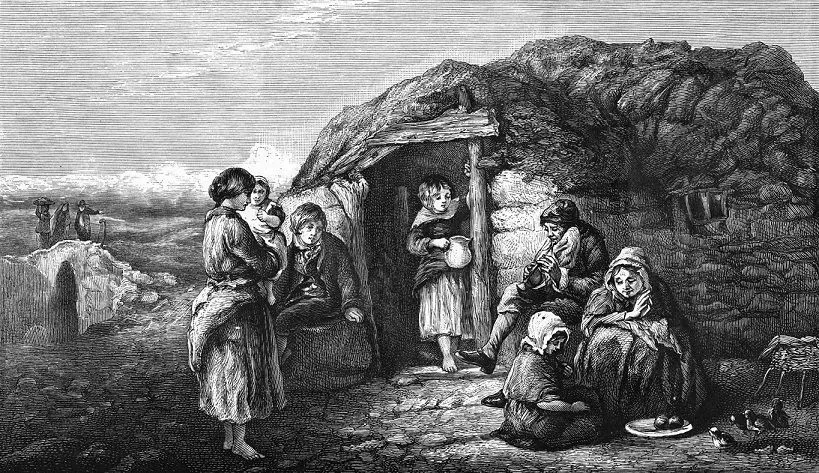
Outside: Outcasts & Smugglers
Exiled from the town, native Irish families lived in outer settlements. In the shadow of the Blind Gate, a dark economy thrived: smugglers traded rebel intelligence, forbidden goods, and news through cracks in the stone.